
Car care
Is it safe to clean an engine bay?
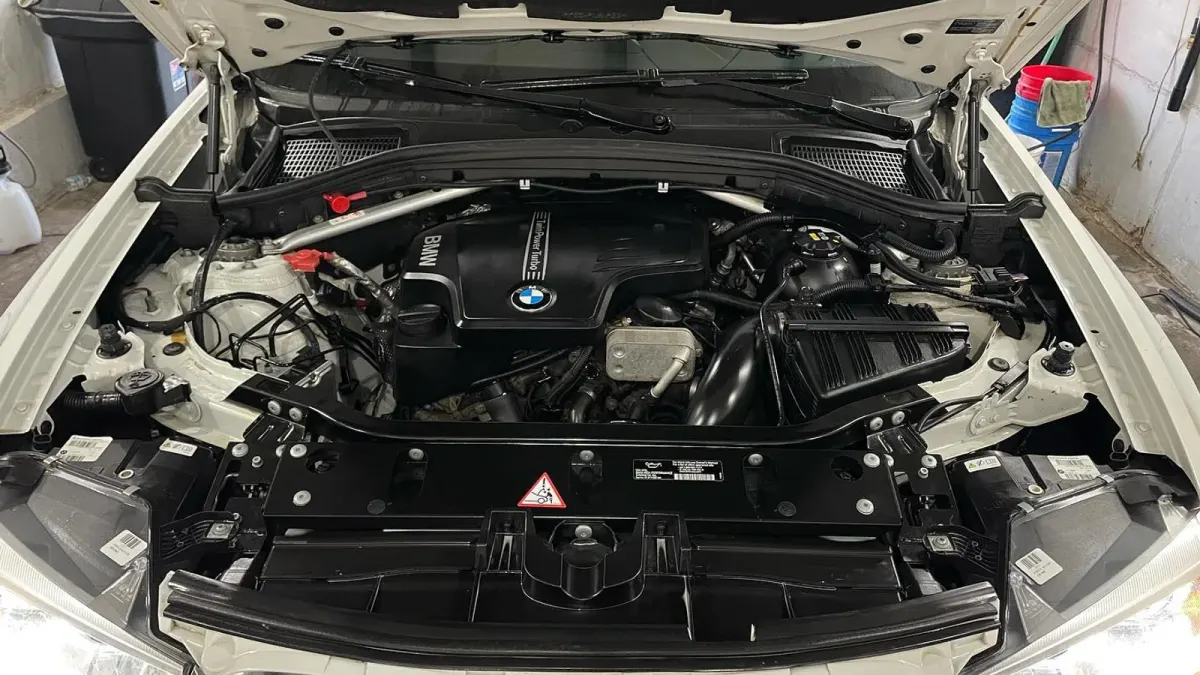
Pop the hood on many cars that are a few years old and the whole engine bay is the same dusty grey. Cleaning it can be done safely. Cleaning it with a pressure washer and no preparation is a good way to end up at a mechanic. The difference is water, and where it goes.
Why bother
Oil film and dust coat everything under the hood evenly, so a small leak is easy to miss. On a clean engine, a fresh leak stands out. A mechanic working on it can also see what they're doing. And it looks like a cared for car when the hood goes up.
Where the risk is
Water is the problem, mostly in three places:
- Pressure. A pressure washer can force water past connector seals, bend radiator fins and knock vacuum lines loose. Most guides say not to use one.
- Electrical parts. The alternator, the fuse box, the battery terminals and exposed connectors don't like to be soaked.
- The air intake. Water doesn't belong in it.
Heat matters too. Let the engine cool first. Degreaser on a hot block dries too fast and streaks, and cold water on hot metal isn't kind to it.
What to cover
Before anything gets wet, cover the alternator, the air intake, the fuse box and the battery terminals. Plastic bags or dry microfiber, taped at the edges, will do. Tape the bag, not the parts. Delicate plastic tabs can snap when you peel tape off them.
The cleaning itself
- Brush off loose dust and leaves.
- Spray an engine degreaser on, and use a product made for the job. Household cleaners and dish soap can harm rubber, plastic and wiring insulation.
- Agitate with a soft brush.
- Rinse gently, from the top down. A garden hose on a soft setting is plenty.
- Dry it with compressed air or microfiber.
- Take the covers off and check that nothing is damp behind them and every connector is seated. Do that before you start the engine.
If you aren't sure what a part is, leave it out of the wash. Your owner's manual is the place to start.
How we do it
Our engine bay cleaning follows the same idea. We mask the electrical parts first, then use non-conductive steam and a degreaser instead of a hose, worked in with soft horsehair brushes. Compressed air blows the moisture out of crevices, and an anti-static satin dressing goes on last. It takes about an hour.
If your car has a known electrical problem or modified wiring, tell us at drop-off.
What it won't do
A clean engine bay doesn't repair anything. It won't stop an oil leak. What it does is make worn hoses and fresh leaks easier to spot, for you and for your mechanic.