
Car care
Spilled coffee in your car: the first five minutes
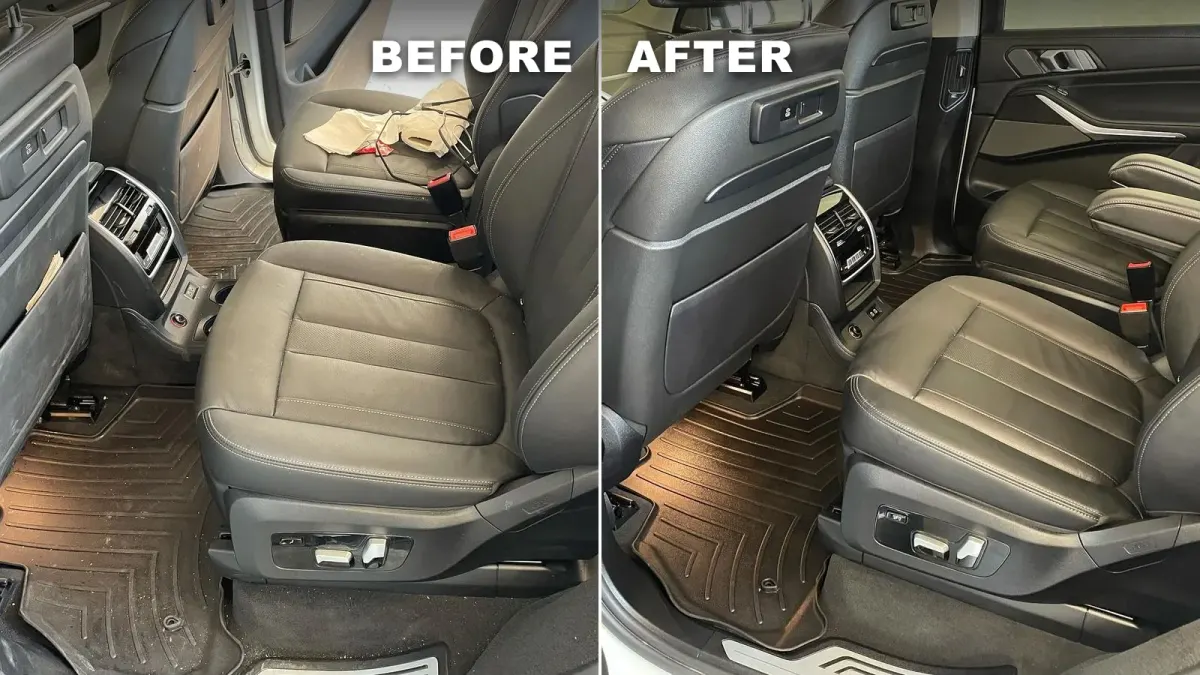
It happens at a red light. The lid pops, or the cup tips over on the way to the cupholder, and now there's coffee on the seat and nowhere to put the towel. What you do in the next few minutes decides a lot.
Blot, don't rub
Grab a clean microfiber towel or a wad of paper towels. Press down firmly, lift, and repeat with a dry part of the towel until it comes up mostly dry. Start at the outside edge of the spill and work toward the middle so it doesn't spread.
Rubbing is the usual mistake. It pushes the coffee deeper into the fibers and makes the stain wider. A folded microfiber towel in the glove box is cheap insurance.
Then cold water, not much of it
Dampen a second cloth with cold water and blot again. It dilutes what's left and keeps it from sinking in. Then blot with a dry cloth to take up as much moisture as you can.
Don't pour water on the seat. Seat foam holds on to water, and a soaked seat can stay damp for days. That's where a sour smell starts.
Check where it went
Coffee doesn't stay where it lands. It runs into the seams, down the side of the seat and onto the carpet. Press a dry towel into the seams and look at the floor and the seat rails. The hidden spot is often the one that starts to smell.
Once you've blotted what you can, open the doors and let the area dry. A fan helps if you're at home.
Skip the heat
Hot water and heat can set a coffee stain, and they're worse when there's milk in it. Stay with cold or lukewarm water until the stain is gone.
That's the home rule. Professionals do use hot water, with an extractor that pulls it straight back out. Without the machine, stay cold.
Know what your seat is made of
- Fabric: blot as above.
- Leather: wipe up the liquid, then wipe the leather with a lightly damp cloth. Keep liquid out of the seams and out of any perforation holes.
- Suede-type material: these don't like water. Blot gently, don't wet it, and check your owner's manual before you reach for a cleaner.
What to leave in the cupboard
Skip household bleach and harsh cleaners. They can change the color of the fabric, and then the stain is the smaller problem.
If there was milk or cream in the coffee, an enzyme cleaner is the right product. It's made to break down proteins and fats, which ordinary soap doesn't do well.
If it's still there tomorrow
A dry stain is harder to shift than a fresh one. That doesn't mean it's permanent. Coffee is one of the stains hot water extraction handles best.
Our seat shampooing starts with an enzymatic foam to break down food and other organic stains. Then 210°F hot water goes in and comes straight back out, carrying the dirt with it. Leather gets conditioned, and a heat dry follows so the seat isn't left soaked. If a mark isn't going to lift, we tell you before we start.