
Car care
Why headlights turn yellow, and what actually fixes them
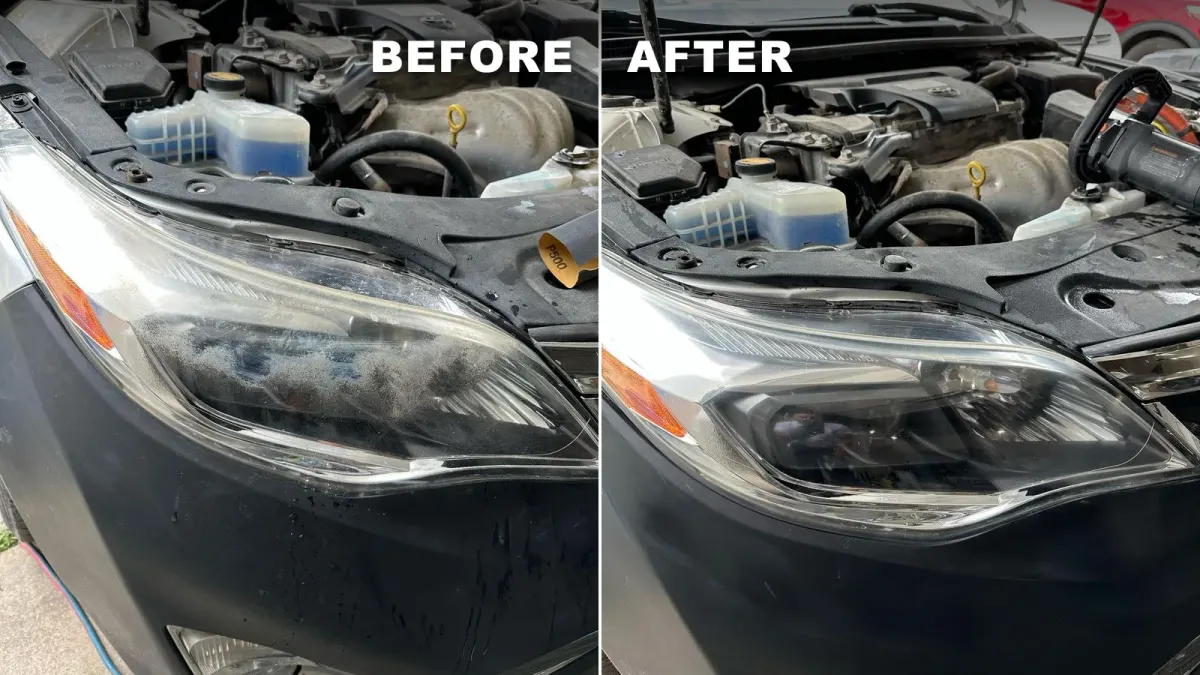
Most cars in Nebraska have at least one headlight that has started to go cloudy. You rarely see it happen. The lens goes from clear to a little milky, then to yellow, and one night you notice the road looks dimmer than it used to.
What is happening to the lens
A headlight lens isn't glass. On nearly every modern car it's polycarbonate plastic, and the factory puts a thin hard coat over it to protect it from sunlight. That coat doesn't last as long as the car does. Sun, heat, road grit and car wash brushes wear it down, and once it's gone the plastic underneath oxidizes. Oxidized plastic is yellow and hazy.
The damage is on the outside of the lens. That's the good news, because it's the part you can fix.
How much light you lose
AAA had a lab test headlights from two popular sedans, both about 11 years old. The clouded lenses put out roughly 20 percent of the light that new ones do. Restoring them, by a professional or with a home kit, brought the output back up to about 70 percent.
Nothing on the dashboard tells you this is happening. The lights still turn on, so most people just drive a little slower at night and never connect the two.
What people try at home
Toothpaste. It's a mild abrasive, so it can polish off light haze and the lens looks better for a few weeks. It doesn't put anything back, though. The plastic is bare, and it starts yellowing again.
Harsh chemicals. We'd stay away from solvents and strong cleaners. Polycarbonate can be damaged by them, and a lens that is crazed or cracked can't be restored.
Restoration kits. These can work if you follow every step. Where they usually fall short is an uneven sanding job, or skipping the UV sealant at the end. Without the sealant the lens yellows again quickly.
What a proper restoration does
The method is the same whoever does it. Sand off the failed outer layer in stages, from coarse to fine. Polish the lens clear. Then seal it, because sanding takes off whatever was left of the factory coat and the plastic needs new UV protection.
The order and the seal are what matter. Skip the fine sanding and the polish can't clear the haze. Skip the seal and you've paid to start the clock again. Our headlight restoration follows those steps and takes about 45 minutes.
When restoration isn't the answer
A few things sanding can't fix:
- Moisture or haze inside the headlight housing. That's a failed seal, and it needs repair or replacement.
- A lens that is cracked or deeply pitted.
- Dim light behind a clear lens. If the lens looks fine and the light is still weak, the bulb is the next thing to check.
Replacement is the other option. In the AAA test, a new original-equipment headlight got output back to full, which restoration didn't. It also costs a good deal more, so for many cars restoration is the sensible middle road. If yours is badly damaged, replacement might be the better call, and a good shop will tell you so.
How to tell if yours need it
Look at both lenses in daylight. If either has a yellow tint, or you can't see the bulb clearly through it, it's on its way. That haze is what scatters the beam at night.
Keeping them clear
Shade and garages do more than any product. After a restoration, wash the lenses with normal car soap and skip abrasive polishes on them. The sealant is a coating, and scrubbing at it wears it off.