
Car care
Why your vacuum misses pet hair, and what works instead
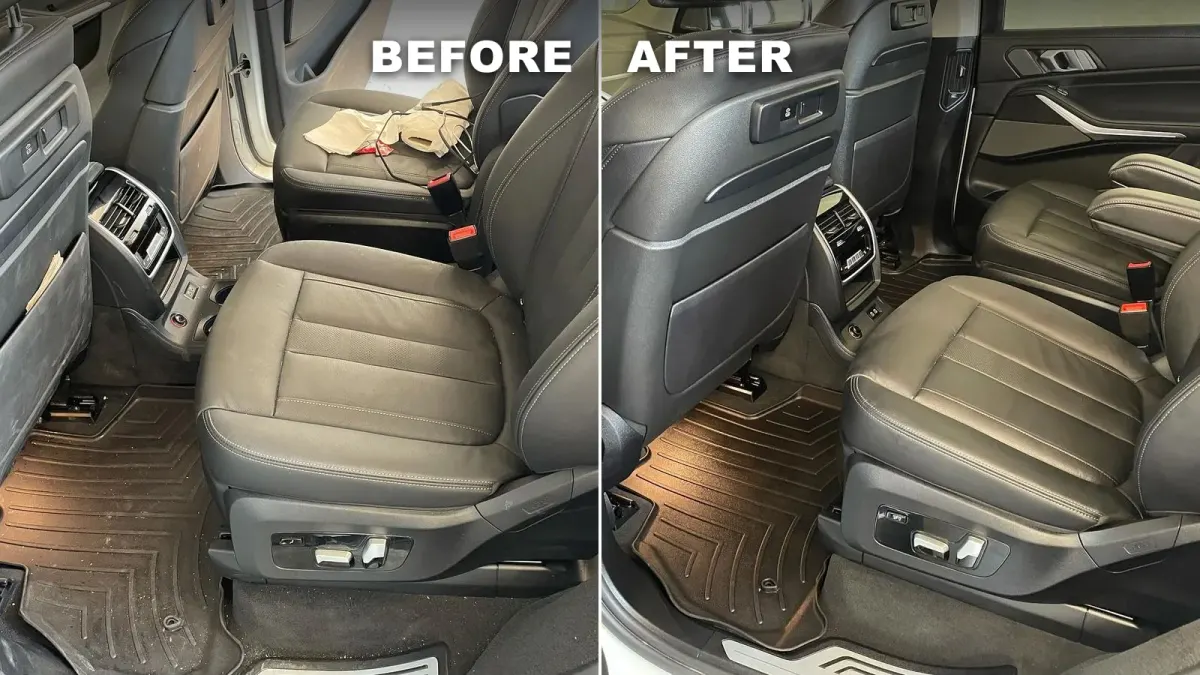
You vacuum the back seat, it looks fine, and then you sit down and the fabric is still covered in hair. If you have a dog, you know this one.
Why the vacuum misses it
Pet hair, especially short, stiff dog hair, doesn't just lie on top of upholstery. It works into the weave and hooks itself there. A vacuum pulls air across the surface, and that isn't enough to break the hold, so the hair stays put.
The fix most detailers use is to loosen the hair first and vacuum second. Friction does the loosening.
Three tools that work
A damp rubber glove. Wet it lightly, so it feels barely moist and not wet, and sweep your hand across the fabric in one direction. The hair rolls up into clumps you can pick off. It's cheap and it works on cloth seats, door inserts and carpet. It's slow, and it isn't for suede, Alcantara or untreated leather.
A rubber blade or a squeegee. A rubber detailing blade is the better of the two. A window squeegee will do for big flat areas like the trunk floor and the floor mats. Neither is much good in a tight footwell or around the seat bolsters.
A pet hair stone. This is a pumice-type block, and it's the strongest option for hair that is really ground in. It's also abrasive. Use it on durable, low-pile carpet and mats only. Never on leather, vinyl or the seats, and always try it on a hidden spot first.
Whichever you pick, rake first, then vacuum. A few strokes in one direction with the vacuum tip pull loosened hair out better than going back and forth.
A back seat, start to finish
This order wastes the least effort:
- Take the mats out and shake them well. Do them separately.
- Rake the seat with the glove or blade, working in one direction and pulling the hair into piles along the seams.
- Vacuum the piles, then run the crevice tool along the seams and where the seat meets the backrest.
- Do the carpet the same way, a section at a time, raking before you vacuum.
- Finish with a second pass of the glove. Whatever it picks up is what the first two steps missed.
The places hair hides
Even after the seats look clean, hair collects where a hose doesn't reach well: the seat rails, the seams in the upholstery, the vents, and the cargo area. A burst of compressed air at the vents and the rails shakes loose what the vacuum missed.
Keeping it from coming back
A washable seat cover or blanket does more than any tool. Brush the dog before it gets in the car. Put a rubber mat in the cargo area, where it's easy to shake out. Hair that never reaches the carpet is hair you never have to dig out.
When it's too much
Some cars have years of hair woven into the carpet. At that point the glove and blade method is a long job, often more than an hour of hard work, and it can fray the fabric if you rush. That's when to hand it over.
We do pet hair removal by hand. Rubber blades and brushes lift the hair out of the fabric, then we deep vacuum the seats, mats, crevices and trunk, and purge the vents and seat rails with air. You can book it on its own, or add it to another service when you book.